
Essential Tips to Avoid Tile Cracking During Installation
Tile cracking occurs when stress exceeds a tile’s ability to flex, leading to fissures that compromise both appearance and performance. Identifying these primary causes helps prevent damage at the source.
Are visible hairline cracks undermining the beauty and durability of your tile floors before they even settle? Preventing tile cracking requires understanding root causes, executing precise subfloor preparation, choosing the right materials and techniques, and maintaining proper usage habits. This guide answers the critical question of what should I consider to avoid tile cracking during installation and usage by covering: tile flooring
What Are the Most Common Causes of Tile Cracking?
- The most common causes of tile cracking and how they generate stress points
- Step-by-step subfloor preparation practices that ensure stability
- Material selections and installation techniques that absorb movement
- Post-installation maintenance tips for extending tile life
- Repair methods for minor cracks and triggers for professional intervention
- The advantages of professional tile installation services in the Greater Toronto Area
By following these strategies and leveraging expert installation methods, you can enjoy crack-free floors that stand the test of time.
The table below describes each cause, its failure mechanism, and the resulting effect on tile flooring integrity.
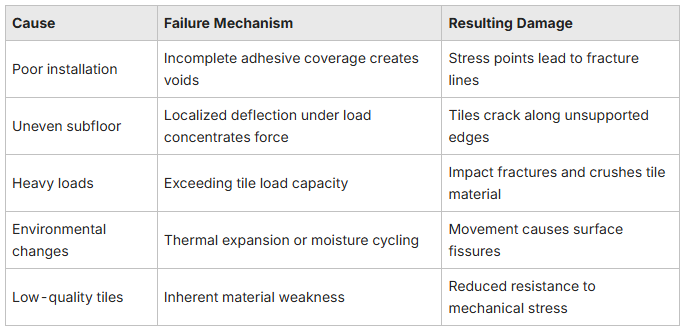
Understanding these failure modes sets the stage for targeted prevention strategies that address each underlying issue.
How Does Poor Installation Lead to Tile Cracking?
Poor installation causes tile cracking when gaps in adhesive coverage or inadequate back-buttering leave sections of tile unsupported.
- Inconsistent thin-set application fails to bond tiles fully
- Using the wrong notched trowel size limits mortar contact
- Skipping full-coverage techniques allows substrate movement
- Ignoring manufacturer guidelines on pot life and open time
Addressing these errors by ensuring 100 percent mortar coverage and correct tooling immediately prevents stress concentrations that result in cracks.
Why Is Subfloor Condition Critical to Preventing Cracks?
A subfloor that is uneven, unstable, or moisture-laden undermines tile integrity by allowing excessive deflection or causing adhesive failure. Proper substrate ensures uniform load distribution and stable support for tiles.
- Levelness variances greater than 1/8 inch over 10 feet create deflection risks
- Moisture content above recommended thresholds prevents proper mortar cure
- Loose or squeaky boards introduce movement under foot traffic
Ensuring a stable, dry, and level subfloor directly prevents the conditions that lead to tile flooring fractures.
How Do Heavy Loads and Impact Damage Cause Tile Cracks?
Heavy loads and impact damage generate point pressure that exceeds a tile’s flexural strength, producing cracks at stress concentrations.
- Dragging furniture without protective pads concentrates weight on small areas
- Dropping heavy objects applies sudden force beyond tile limits
- High-traffic equipment (e.g., carts, trolleys) imposes repeated stress cycles
By managing load distribution and cushioning impacts, users can avoid mechanical stresses that initiate tile cracking and chipping. tile flooring
What Environmental Factors Contribute to Tile Cracking?
Temperature fluctuations and moisture cycles induce expansion and contraction in both tile and substrate layers, creating shear stresses at the bond interface.
- Rapid heating or cooling causes tile to expand or contract unevenly
- Substrate moisture variations weaken adhesive bond strength
- Freeze-thaw cycles in exterior settings generate microfractures
Controlling environmental conditions during and after installation minimizes movement-induced stresses that lead to cracking.
How Do Low-Quality Tiles Affect Crack Resistance?
Tiles with lower density, higher porosity, or substandard firing processes lack the structural integrity to resist flexural and impact stresses. Tile flooring
- Porosity above 0.5 percent reduces breaking strength
- Thinner tile bodies flex more under load
- Inconsistent glaze and body composition create weak spots
Selecting tiles with proven breaking strength ratings and quality certifications safeguards against premature cracking and surface damage.
How Should You Prepare the Subfloor to Prevent Tile Cracking?
Proper subfloor preparation establishes the stable, uniform foundation needed to prevent tile cracking. Preparation integrates leveling, moisture control, and stability testing before any tile or membrane goes down.
What Are the Key Steps in Subfloor Leveling and Cleaning?
First, remove debris, adhesives, and contaminants to ensure full contact between substrate and mortar. Then, use self-leveling compounds to correct uneven areas.
- Clear the surface of debris and loose materials.
- Vacuum and wipe with a suitable cleaner to remove dust.
- Prime the surface if required by leveling product instructions.
- Apply self-leveling underlayment in thin coats, following manufacturer curing times.
Careful leveling and cleaning deliver a flat plane that directly prevents deflection-related cracking. For more information about our offerings, visit tile flooring.
Why Is Proper Subfloor Curing Essential Before Tiling?
Proper curing allows concrete or leveling compounds to reach full strength and dimensional stability, preventing shrinkage cracks from migrating into the tile layer. Curing involves maintaining recommended moisture and temperature conditions.
- Concrete requires a minimum of 28 days for full hydration
- Leveling underlayments often mandate 24–72 hours of drying time
- Controlled humidity prevents rapid moisture loss that causes shrinkage
Ensuring complete curing removes future substrate movement risks and maintains adhesive performance.
How Do You Assess Subfloor Stability and Deflection Standards?
Subfloor stability is measured by deflection limits defined in industry standards, ensuring that under load the substrate does not flex beyond tile tolerance.
- Concrete slabs: maximum L/360 deflection ratio under live load
- Wood joist systems: maximum L/720 deflection ratio under tile load
- Check deflection with a straightedge and precision level
Meeting or exceeding these criteria provides a rigid platform, preventing bending stresses that crack tiles.
What Are the Best Practices for Moisture Barriers and Underlayment?
Installing appropriate moisture barriers and underlayments isolates tiles from dampness and substrate movement.
- Use polyethylene or sheet membranes on concrete with high moisture vapor emissions
- Select uncoupling membranes to absorb differential movement
- Seal joints and seams thoroughly to prevent moisture ingress
By combining vapor barriers with uncoupling products, installers create a dry, movement-resistant base that greatly reduces cracking potential.
Which Materials and Installation Techniques Prevent Tile Cracking?
Choosing flexible, resilient materials and precise installation techniques ensures tile flooring assemblies accommodate minor movements without cracking.
How to Choose the Right Tile Adhesive and Grout for Durability?
Selecting the correct mortar and grout balances bond strength with flexibility, absorbing substrate movement and preventing grout cracks.
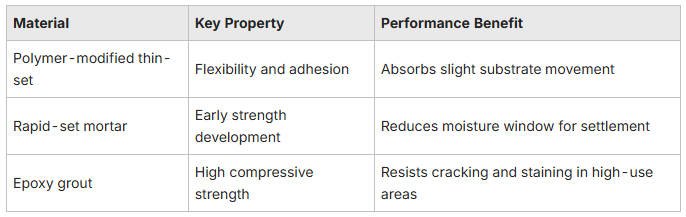
Applying full-coverage adhesive with the right notched trowel ensures a continuous, resilient bond that shields tiles from cracking forces.
What Is the Role of Crack Isolation Membranes in Tile Installation?
Crack isolation membranes decouple tile assemblies from substrate movements, preventing reflective cracks from transferring. These membranes absorb shear and differential shifts, protecting the tile layer. Placing the membrane between mortar beds ensures any slab cracks stay beneath, safeguarding surface aesthetics and function.
How Should Expansion Joints Be Designed and Installed?
Expansion joints accommodate large-scale movements by providing intentional gaps that relieve stress. Follow these installation steps:
- Plan joint locations at perimeters, changes in substrate type, and mid-expanses every 20–25 feet.
- Use compressible joint fillers with defined depth relative to tile thickness.
- Seal joints with flexible sealant rated for tile applications.
Properly designed joints eliminate uncontrolled fissures by channeling movement into safe, sealed gaps.
What Tile Types Offer the Best Crack Resistance?
Porcelain tiles, due to their high density and low porosity, deliver superior fracture toughness compared to standard ceramic or softer natural stone.
How Does Tile Thickness and PEI Rating Affect Durability?
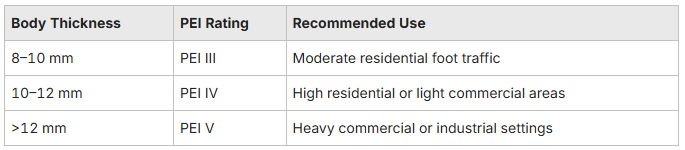
Selecting a tile with adequate thickness and a higher PEI rating directly improves resistance to cracking under repeated loads. tile flooring is essential for this purpose.
What Are the Best Post-Installation Usage and Maintenance Tips to Avoid Tile Cracking?
Protecting tiles after installation preserves their integrity and prevents new cracks from forming due to misuse or neglect.
How Can You Protect Tiles from Impacts and Heavy Loads?
Implement protective measures that distribute weight and cushion impact:
- Place area rugs or floor mats in entryways to absorb shock
- Attach felt pads to heavy furniture legs before placement
- Use plywood sheets when moving heavy equipment across the floor
These simple actions reduce point stresses and preserve tile surfaces.
How Do Temperature and Moisture Management Prevent Cracks?
Controlling indoor environmental conditions limits tile flooring and substrate movement:
- Maintain consistent room temperature to avoid thermal cycling
- Use dehumidifiers in damp areas to stabilize moisture levels
- Ensure under-floor heating systems follow manufacturer expansion guidelines
By stabilizing environmental factors, users eliminate hidden stresses that cause micro-fractures.
What Routine Cleaning and Grout Sealing Practices Extend Tile Life?
Regular maintenance preserves bond integrity and prevents grout deterioration: Regular maintenance preserves bond integrity and prevents grout deterioration.
- Clean with neutral-pH, non-abrasive solutions to avoid surface damage
- Reseal grout lines every 1–2 years to maintain water resistance
- Inspect grout joints for hairline cracks and repair promptly
Consistent care keeps both grout and tile bodies in peak condition, minimizing crack initiation.
When Tiles Crack: How to Repair and When to Call a Professional?
Knowing when to apply DIY repairs and when to seek expert help ensures lasting fixes and prevents recurring damage.
How Can You Repair Hairline Cracks Yourself?
Minor surface cracks can be filled and concealed with simple steps:
- Clean the crack thoroughly of debris and dust.
- Inject a color-matched epoxy filler using a fine-point applicator.
- Smooth the surface flush with a putty knife.
- Allow full curing before light foot traffic.
This method restores appearance and prevents grout from infiltrating the fissure.
When Is Tile Replacement Necessary?
Tile replacement becomes essential when damage compromises structural integrity or aesthetics beyond repair:
- Cracks wider than 1/8 inch that continue to spread
- Multiple adjacent tiles exhibiting consistent fracture patterns
- Underlying substrate issues revealed after crack enlargement
Recognizing these thresholds ensures that replacement prevents deeper problems.
What Are Signs You Need Professional Tile Installation or Structural Assessment?
Engaging experienced installers or structural experts is warranted when:
- Cracks appear immediately after installation
- Subfloor movement or joist issues undermine tile stability
- Large format or specialty tiles require precision techniques
- Water intrusion under tiles suggests waterproofing failures
Professional evaluation identifies root causes and implements advanced solutions for long-term performance.
Why Choose Professional Tile Installation Services to Prevent Cracking?
Professional installers combine technical expertise, premium materials, and quality control to deliver crack-free tile floors with guaranteed longevity.
How Do Expert Installers Ensure Crack-Free Tile Floors?
Experienced teams follow rigorous processes:
- Conduct detailed subfloor assessments and deflection testing
- Implement industry-approved moisture barriers and uncoupling membranes
- Apply full-coverage, polymer-modified adhesives with calibrated trowels
- Design and install expansion joints aligned with tile layout
These steps, refined through specialized training, eliminate common failure points and support lasting installations.
What High-Quality Materials Do Professionals Use to Prevent Cracks?
Industry leaders rely on materials that meet or exceed standards:
- Crack isolation membranes conforming to ANSI A118.12
- Rapid-set, polymer-enhanced mortars for uniform bonding
- Epoxy or urethane grouts with superior flexural properties
- High-PEI porcelain tiles with certified breaking strength
Using these products in concert ensures assemblies withstand movement and loads without fracturing.
How Have Local Projects Demonstrated Successful Crack Prevention?
In multiple Greater Toronto Area installations, Squarefoot Flooring’s specialists have prevented cracking in challenging conditions such as unheated garages and large-format tile layouts by integrating uncoupling membranes and precise expansion joint systems. These case studies confirm that quality materials and expert methods deliver flawless, crack-resistant floors that exceed client expectations.
What Are Frequently Asked Questions About Preventing Tile Cracking?
Why Do Tiles Crack After Installation?
Tiles often crack after installation due to substrate movement or installation errors such as inadequate adhesive coverage, uneven subfloors, or missing expansion joints that allow stress to exceed the tile’s flexural strength.
What Is the Best Underlayment to Prevent Tile Cracking?
The most effective underlayment combines a moisture barrier with an uncoupling membrane, isolating tiles from substrate vapor and differential movement while providing stable support.
Can You Install New Tile Over Cracked Tile?
Installing new tile over cracked tile is possible only if the substrate is sound and damaged tiles are removed. However, failing to replace cracked tiles and underlying membranes risks transferring future cracks into the new installation.
How Do Expansion Joints Help Prevent Tile Cracking?
Expansion joints create controlled gaps that accommodate thermal and structural movement, directing stresses into flexible sealant rather than allowing fissures to form in rigid tile bodies.
What Causes Hairline Cracks in Tiles?
Hairline cracks usually result from minor substrate deflection, thermal cycling, or grout shrinkage phenomena that introduce small stresses at the tile edges and propagate micro-fissures over time.
Visible cracks can detract from your space and lead to more extensive damage if left unaddressed. By following the prevention strategies outlined here from meticulous subfloor preparation to professional installation techniques you create a resilient tile assembly built to last. For homeowners and commercial clients throughout the Greater Toronto Area and Ontario, partnering with experienced installers ensures every tile project remains crack-free from day one. Reach out for expert guidance and installation services that deliver both beauty and durability.